Perfect Italian Osso Buco with Fresh Gremolata Sauce Recipe
A pot of Perfect Italian Osso Buco with Fresh Gremolata Sauce can fill your kitchen with aromas that instantly transport you to Milan, even if there’s snow falling outside or a drizzle tapping the window. There’s something wonderfully grounding about the way the shanks brown in olive oil and butter—the sizzle, the swirl of golden edges turning crisp, the subtle smokiness that rises as you scrape the bottom of the Dutch oven. This is a dish for nights you want to cook slow, sip wine, and let anticipation build as the whole house fills with the promise of something rich, savory, and deeply comforting.
I first fell in love with osso buco at a friend’s candlelit dinner, served on creamy polenta that caught every drop of the sauce. The star, though, was always that fresh gremolata—a bright, zesty wake-up call tossed over the buttery, melting veal. It’s the pop of parsley and lemon that cuts through, giving the dish its unmistakable balance. You don’t have to wait for a holiday or fancy occasion to make this. Sometimes, you just need a reason to linger over the table, and this is it.
When Osso Buco Comes Home
This dish isn’t just another stew you tuck away for winter. The magic of Perfect Italian Osso Buco with Fresh Gremolata Sauce is how it invites everyone in—no matter if you make it for Sunday supper or an anniversary dinner with a glass (or three) of wine. The slow braising turns even the busiest minds mellow and patient, because you know something remarkable is happening under that heavy lid. The sauce simmers, the bone marrow melts into every spoonful, and you find yourself checking the oven, not out of worry, but anticipation.
I usually make this when I want to treat friends, when the comfort of veal that spoon-falls apart and a bright punch of gremolata feels celebratory yet familiar. It ends up being the star, no matter what—no one can resist tearing pieces of rustic bread through that glossy sauce or stealing the last bit of parsley-lemon topping from the platter.
The Ingredients That Give This Osso Buco Its Edge
Every element in osso buco deserves its place—there’s nowhere to hide in a dish that’s equal parts hearty and elegant. Here’s what brings it all together:
- Veal shanks – The heart of the dish, with their rich marrow and meat that braises to unbelievable tenderness.
- Flour – Used for dredging, coaxing out a golden crust and subtly thickening the sauce as it simmers.
- Extra virgin olive oil – For browning the shanks and lending a peppery smoothness throughout.
- Unsalted butter – Melts into the oil, boosting flavor and giving the base an irresistible richness.
- Yellow onion – Sweet and mellow, rounds out the sauce with every minute it softens in the pot.
- Carrots – Brings a subtle earthiness and touch of natural sweetness to offset the acidity.
- Celery – Essential for the classic soffritto base and quiet herbal background notes.
- Garlic – For both braising and the gremolata, infusing layers of savory depth and sharpness.
- Dry white wine – Deglazes and lifts the browned bits, while gently brightening the sauce.
- Crushed tomatoes – Adds body and acidity that perfectly balances all that slow-cooked richness.
- Beef or chicken broth – Builds the sauce, mingling with marrow and vegetables for deep flavor.
- Fresh thyme – Tossed into the braise for fragrant, woodsy hints that perfume every bite.
- Bay leaves – Another layer of savory aroma, rounding out the slow-cooked sauce.
- Salt and black pepper – For seasoning throughout, always added to taste and with confidence.
- Flat-leaf parsley – The backbone of gremolata, bringing freshness and color right at the end.
- Lemon zest – Lifts the gremolata and cuts through the rich sauce with brightness and tang.
- Olive oil (optional for gremolata) – Helps the gremolata hold together, if you like a softer topping.
See the recipe card below for the full list of ingredients and measurements.
Building Flavor Layer by Layer
Making osso buco is really about coaxing out as much flavor as you can from every ingredient. You don’t need to rush anything here—think of the process as building a foundation, one aromatic step at a time.
Start by patting those veal shanks super dry—any moisture left will steam instead of sear, and you want a golden crust to capture all that flavor. Dredging them lightly in flour is one of those little restaurant secrets: it helps brown the outsides beautifully, but also thickens the sauce later on. As soon as the shanks hit the oil-and-butter mix, they sizzle fragrantly, and you’ll get those toasty edges that make the dish memorable.
Sweating the onion, carrot, and celery after removing the veal brings a wave of sweetness. Don’t rush this part—let the vegetables really soften and caramelize around the edges; they’ll melt into the sauce and give backbone to every bite. When you add garlic, keep it moving and just golden. A quick splash of white wine deglazes the pot—scrape the sticky brown bits, as that’s where your base flavor lives.
The tomatoes and broth pour in, and soon the shanks return to the pot, cozying up among thyme sprigs and bay leaves. Nestle them so they’re half-submerged, cover, and the oven takes over.
How Osso Buco Really Comes Together Step by Step
- Pat dry each veal shank and season all over with salt and pepper. Roll them quickly in flour and shake off the extra to keep them from getting gummy when seared.
- Heat a mix of olive oil and butter until sizzling but not smoking. Sear each shank, a few at a time, letting them turn a deep golden brown on both sides. Set aside the shanks, keeping all those good pan drippings in the pot.
- Drop in the onion, carrots, and celery. Cook until everything turns soft, gentle, and fragrant—the kind of smell that pulls people into the kitchen wondering what you’re up to. Finish with a toss of garlic, stirring just until you catch its sharp aroma.
- Pour in the white wine to deglaze, scraping up every last caramelized brown bit from the bottom—these make magic in the finished sauce. Let the wine bubble and reduce by half, deepening its flavor.
- Add the crushed tomatoes and then carefully set those browned shanks back in. Pour over enough broth so the meat is nestled but not fully covered. Scatter the thyme sprigs and bay leaves on top. Sprinkle just a touch more salt and pepper for good measure.
- Bring it to a whisper of a simmer, then cover and move the whole pot into a low oven. Let it braise slowly—the shanks practically undo themselves, turning spoon-tender over the course of a few hours. Check once or twice, gently spooning sauce over the tops so every inch gets time in that flavorful bath.
- As the shanks finish, throw together the gremolata: parsley, lemon zest, minced garlic, and a drizzle of olive oil if you like. Stir well—the mix should be bright, vivid, and a little pungent.
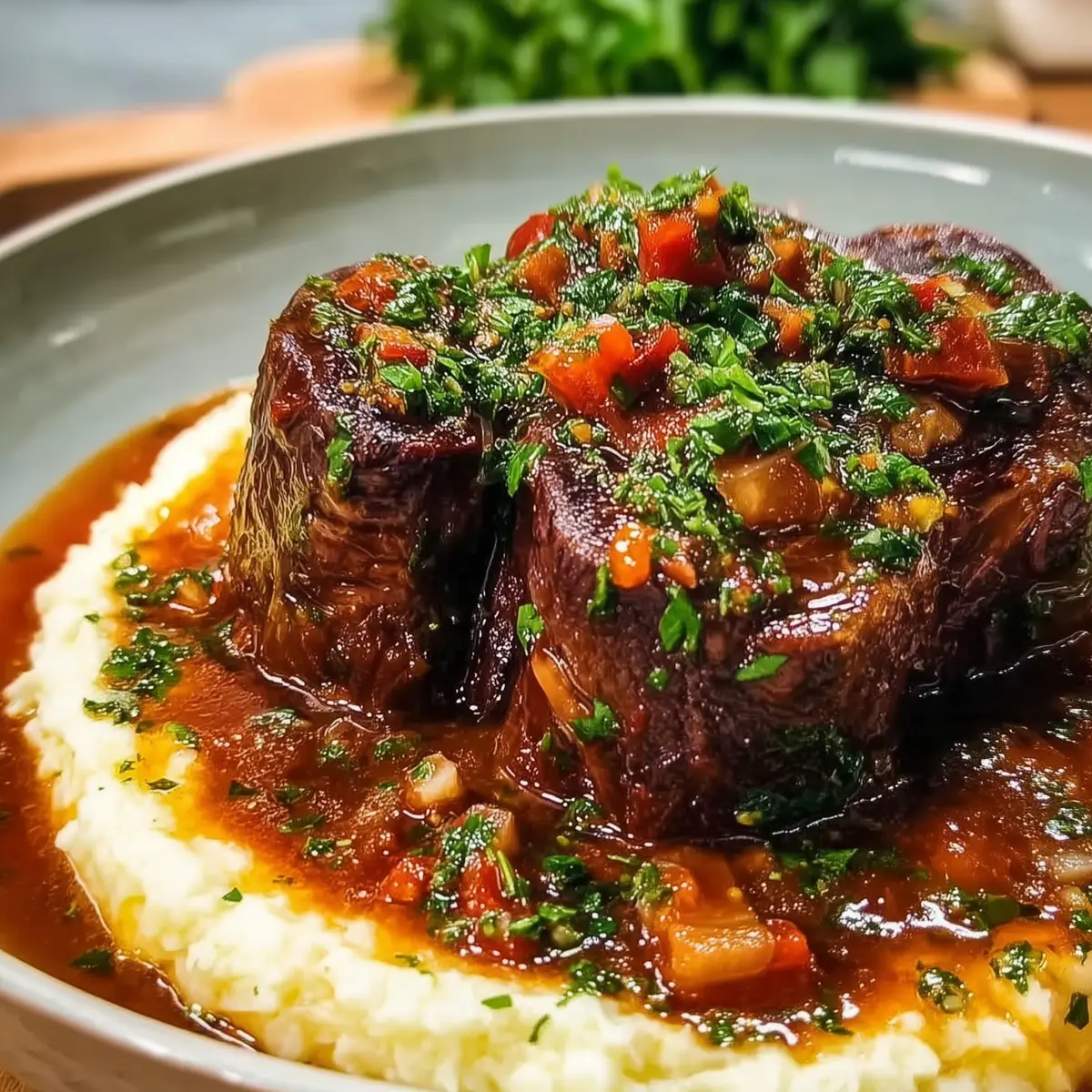
- When the braise is done, carefully fish out thyme and bay leaves. Serve each shank with sauce spooned over and a generous shower of gremolata on top. The contrast—deep, savory sauce and that citrusy crunch—completes every plate.
Texture, Flavor, and That Deeply Satisfying Finish
What hits you first is the texture—the veal, silky-soft but not mushy, fork-tender yet holding its shape right up until the last bite. Every spoonful comes with strands of slow-braised vegetables, all but dissolved into a sauce that’s at once bright and rich, thanks to the tomatoes, wine, and aromatic base.
The marrow, hidden at the center of each shank, is like the soul of the dish—rich, smooth, almost buttery. I always encourage guests to scoop it out, spread it on bread, and mop up the sauce. And then the gremolata, cold and fresh against the warmth: sharp parsley, citrusy lemon, raw garlic—each bite wakes up your palate all over again. It’s bold without overwhelming, simple yet deeply layered, and incredibly satisfying.
Details That Set Your Osso Buco Apart
If you want your Perfect Italian Osso Buco with Fresh Gremolata Sauce to really make people pause and take notice, it’s all in the small details. Here’s what I’ve learned over countless pots:
- Dredge lightly; too much flour will muddy the sauce and make it gloopy. Just a thin dusting does the trick.
- Don’t skip the browning step. Even if you’re tempted to go quick, that deep golden crust is what carries the flavor through the whole braise.
- Use a wine you’d actually want to drink—a cheap bottle will just leave things flat.
- Tuck a little extra garlic into the gremolata for punch. You can even add a sprinkle of finely grated Parmesan for something different.
- If veal is tricky to find, good-quality beef shanks work beautifully, though they’ll have a slightly deeper flavor.
- Store leftovers in the fridge covered—like most braises, this only gets better the next day as the flavors fully marry.
- Gremolata is best made fresh (right as you’re about to serve), but you can prep the parsley and lemon zest ahead and just stir in the garlic at the last moment.
Serving Osso Buco So It Feels Special
The beauty of serving osso buco is how instantly it looks like a feast: the shanks arranged so the bone is front and center, that glistening sauce pooling around each one, and heaps of gremolata raining down. I always like to offer a side that soaks up every last bit—creamy polenta is classic, but the risotto alla Milanese, flecked with saffron, is a golden, luxurious match. Crusty bread on the side is non-negotiable, if you ask me.
This is a dish that invites long, lingering meals—maybe a salad of bitter greens to start, a bottle of wine in arm’s reach, and the kind of company that makes you want to savor every bite. If you’ve got leftovers, shred the meat into pasta or pile it onto a toasted ciabatta for the world’s best sandwich the next day. That’s if there’s any left at all.
FAQs about Perfect Italian Osso Buco with Fresh Gremolata Sauce
Can you freeze Perfect Italian Osso Buco with Fresh Gremolata Sauce?
Absolutely, osso buco freezes well, though it’s best to store the gremolata separately or make it fresh when reheating. Cool the cooked veal and sauce completely, then pack into an airtight container for up to three months. Defrost gently in the fridge and simmer to reheat, stirring occasionally.
What are the best substitutes for veal in osso buco?
If veal isn’t available, beef shanks work beautifully and offer a heartier flavor, while lamb shanks can add a distinctive, slightly gamey note. Both will require about the same cook time as veal, though the flavor will shift a bit—just as delicious, but with their own character.
How should I reheat leftover osso buco so it stays tender?
The gentlest way to reheat is on the stovetop over low heat, covered so the sauce doesn’t reduce too much. Add a splash of broth or water if the sauce is thick. The oven works too; just keep it low and slow to avoid drying out the veal. Always hold off on adding gremolata until right before serving.
Is gremolata essential, or can I skip it when making Perfect Italian Osso Buco with Fresh Gremolata Sauce?
Gremolata isn’t strictly essential, but it truly transforms the dish with its fresh, vibrant punch. If you’re not a fan of raw garlic, try reducing it or swapping in a tiny bit of grated horseradish. The citrus and parsley are what make the flavors sing, so try to keep those if possible.
There’s something undeniably special about gathering everyone around a pot of Perfect Italian Osso Buco with Fresh Gremolata Sauce. Every forkful is a push-and-pull of rich, slow-cooked flavors and bright, mouth-tingling freshness—a dish that feels storied and celebratory, even on a Wednesday night. Whether you serve it over polenta, risotto, or just with a generous hunk of bread, there’s so much comfort and joy in every bite. Don’t be surprised if this becomes one of those recipes you reach for whenever you want the evening to last a little longer and taste a lot better.

Perfect Italian Osso Buco Recipe with Easy Fresh Gremolata Sauce
Ingredients
Equipment
Method
- Pat veal shanks dry with paper towels. Season generously with salt and pepper on all sides. Dredge lightly in all-purpose flour, shaking off excess. (About 10 minutes)
- Heat olive oil and butter in a Dutch oven over medium-high heat. Brown shanks in batches for about 4 minutes per side until golden and crispy. Set aside. (15 minutes)
- In the same pot, sauté onion, carrots, and celery over medium heat until softened and fragrant, about 8 minutes. Add minced garlic and cook for 1 more minute. (10 minutes)
- Pour in white wine to deglaze the pot, scraping browned bits from the bottom. Simmer and reduce by half, about 5 minutes. (5 minutes)
- Stir in crushed tomatoes. Return browned shanks to the pot, nestling them in the sauce. Add broth to come halfway up the meat. Toss in thyme sprigs and bay leaves. Season lightly with salt and pepper. (5 minutes)
- Bring to a gentle simmer, cover, and transfer to a preheated 325°F (160°C) oven. Braise for 2 to 2.5 hours until meat is fork-tender. Check halfway through and spoon sauce over shanks. (2 to 2.5 hours)
- While braising, combine parsley, lemon zest, minced garlic, and olive oil in a bowl to make gremolata. Mix well and set aside. (5 minutes)
- Remove pot from oven, discard thyme stems and bay leaves. Spoon sauce over shanks, sprinkle with gremolata, and serve immediately with risotto or polenta. (5 minutes)